
Design for an Orthodox Church in Amish Country
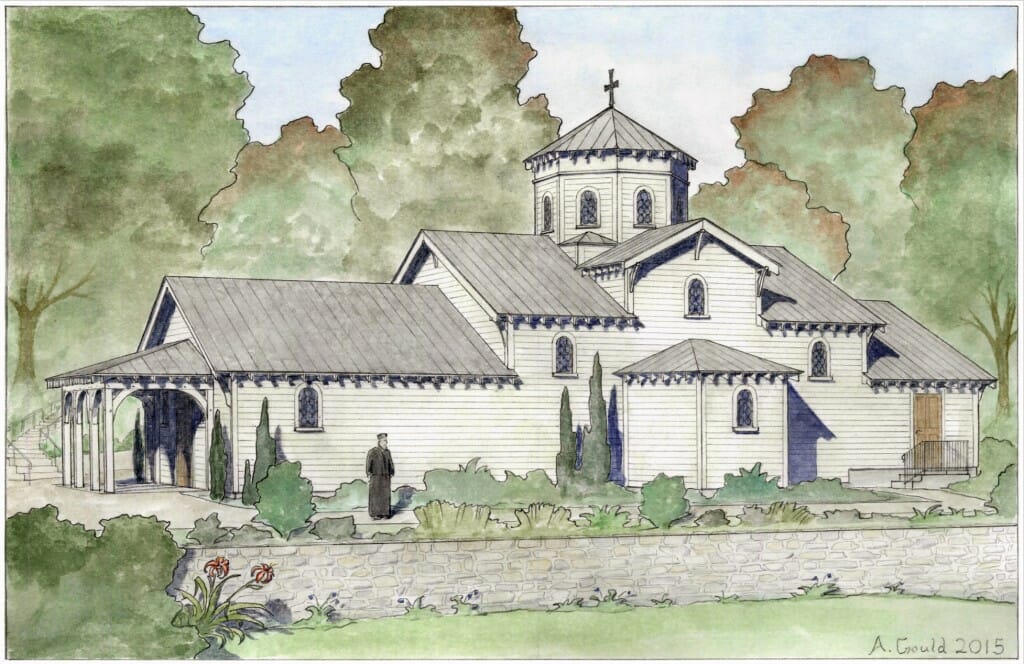
I was recently asked to design a new chapel for Saint Gregory Palamas Orthodox Monastery in Perrysville, Ohio. It is an especially pleasing project for me because the site is located in the heart of the most idyllic Amish farm country – rolling hills, huge simple barns, elegant Victorian farmhouses, quiet roads with horse-drawn buggies.…
Continue reading »PASCHAL PILGRIMAGE TO RUSSIA: FROM DIVEEVO TO VALAAM
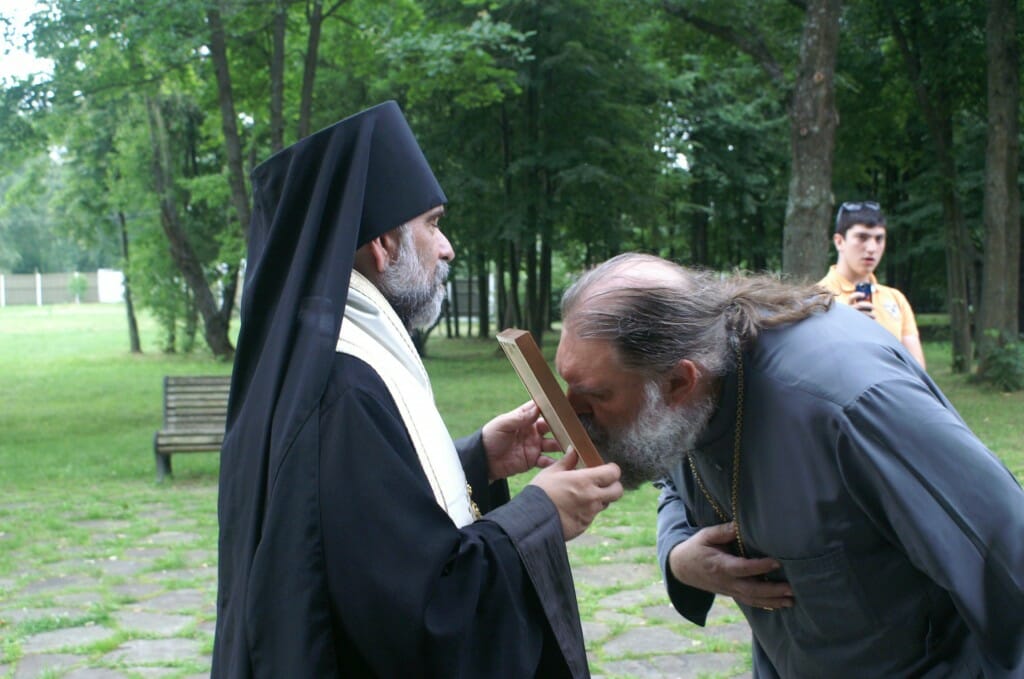
Editor’s note: I had the great privilege of traveling to Russia in 2006 with Fr. Ilya Gotlinsky of Orthodox Tours. It was a superb experience, in every respect. Fr. Ilya leads tours regularly, but I would like to call attention to a special upcoming tour – a pilgrimage tour that will visit Russia’s most…
Continue reading »Andrew Gould featured in Second Issue of Road to Emmaus Journal
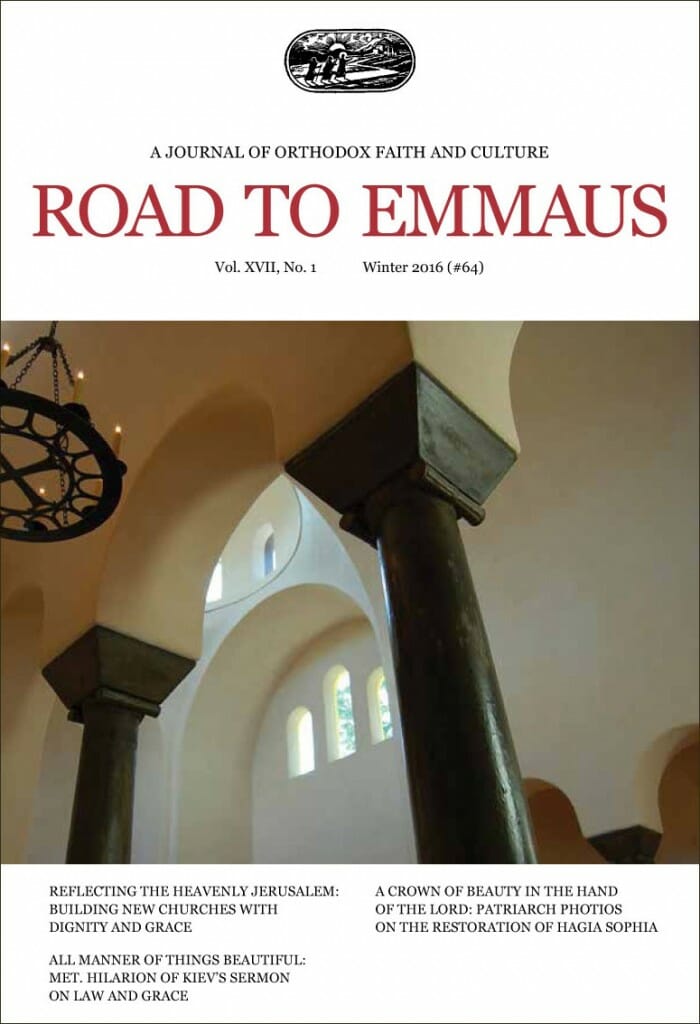
In a previous post, I spoke of the great honor of being interviewed for the Road to Emmaus Journal. In June of 2015, I spent a week with editor Mother Nectaria (McLees), discussing the art and architecture of the Orthodox Church. This second issue continues our interview, and is titled Reflecting the Heavenly Jerusalem: Building…
Continue reading »The Robot, the Mutant and The Artist
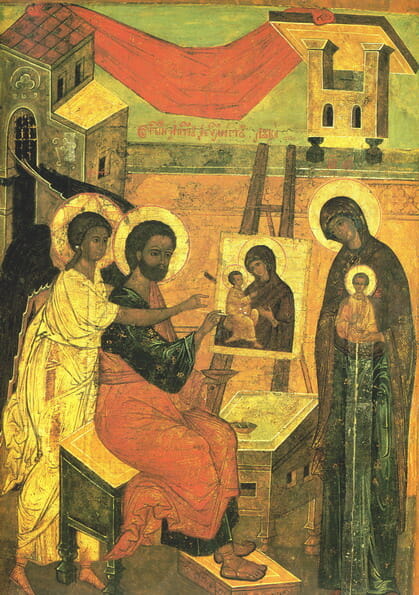
[1]One of the weaknesses in our vision of the world is that we tend to look at what surrounds us from one side of an opposition. This is inevitable as humanity’s existence unfolds like a wheel, waxing and waning, pulled by opposite forces from extreme to extreme. These extremes feed each other, call each other…
Continue reading »Interview with Serbian Iconographer Todor Mitrovic: On the Dialogue Between the Sacred and Secular Arts
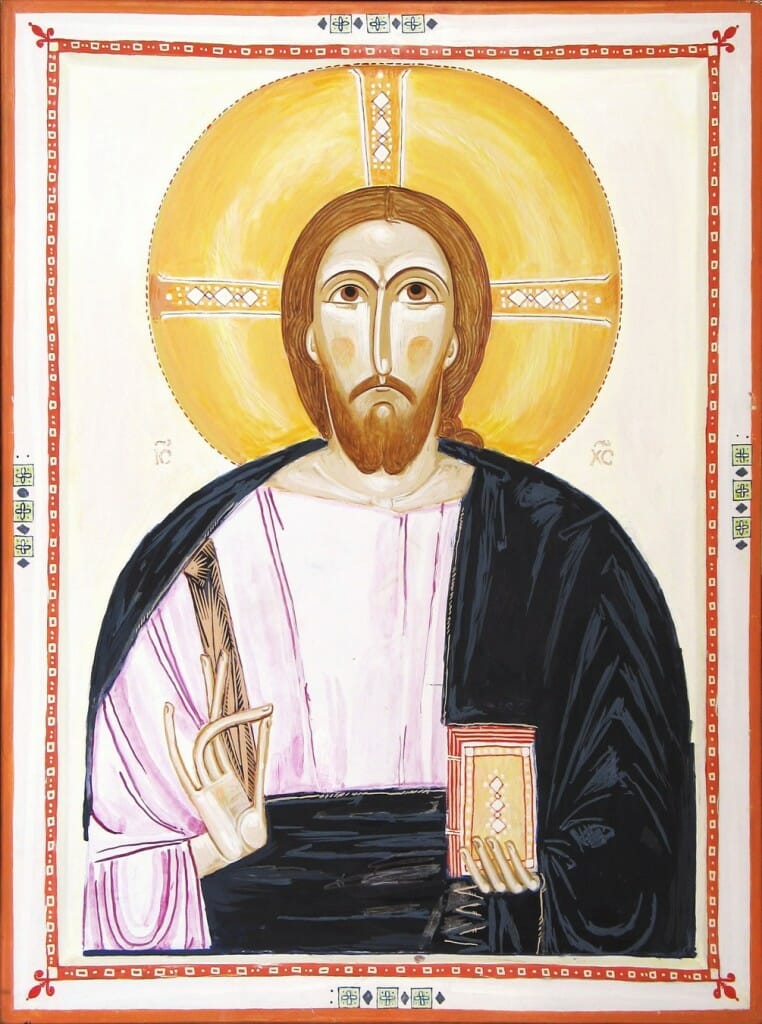
This article was revised and proofread by Jennifer Leslie. Todor Mitrovic was born in Belgrade, Serbia in 1972. He graduated from the Faculty of Fine Arts (FLU) University of Arts, Belgrade in 1997. He was awarded a Master of Arts Degree in 2006 and Doctor of Arts in 2015. The title of his PhD art…
Continue reading »Fr. Philippe Péneaud: Romanesque Iconography Today

Fr. Philippe Péneaud is a priest for the Antiochian Orthodox Church and a prolific woodcarver living in the South of France. Having studied in the great tradition of European woodcarving with Raymond Labeyrie, he converted to Orthodoxy in the 1980s under the influence of Leonid Ouspensky’s “Theology of The Icon” as well as through the works of others…
Continue reading »The Rich Classicism of Fr. Ilie Bobaianu
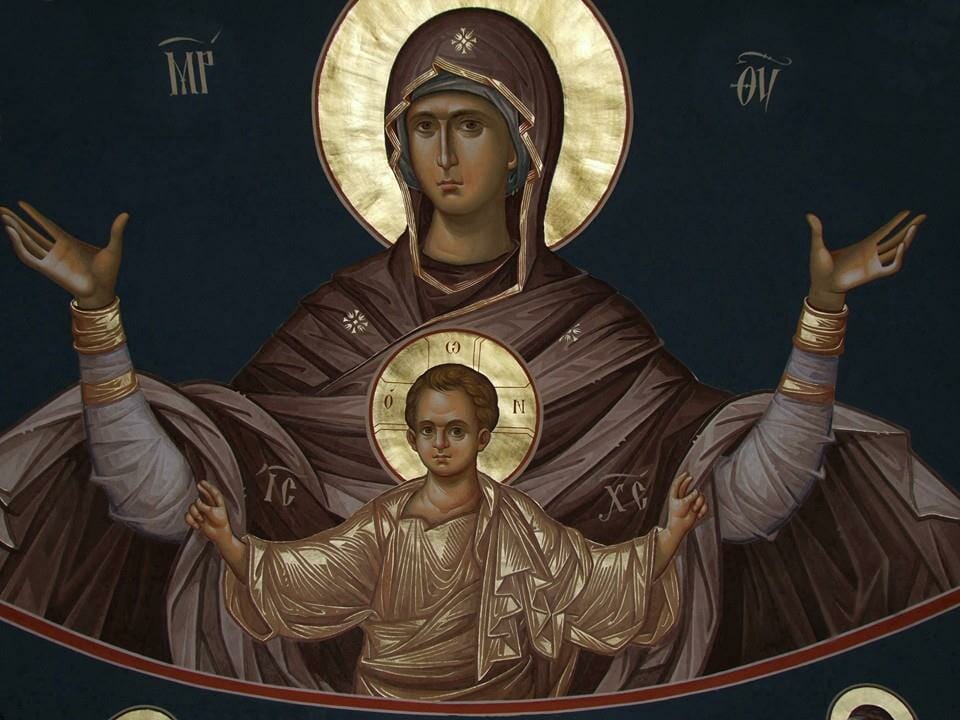
Last year we posted an article about young Romanian iconographers creating traditional icons looking partially to modern art for elements to include in their work. With the spiritual renewal of Romania, there are also some wonderful iconographers exploring the rich strain of classicism in Byzantine icons. Fr. Ilie Bobaianu (Dantes) is a monk and iconographer who’s work shines particularly…
Continue reading »A Miracle of Liturgical Art: The Church of the Protection of the Mother of God at Yasenevo
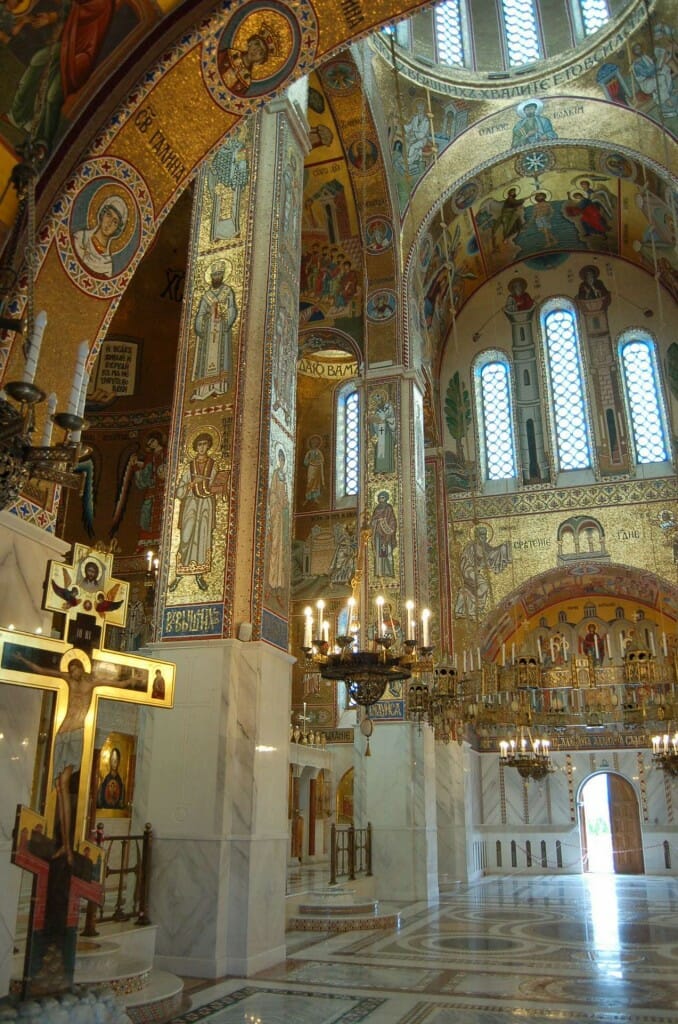
This past fall I had the opportunity to visit a construction project that is nothing short of a miracle. I saw a group of mostly volunteers and amateurs, working with small donations, building a church to rival any monument in the history of Christendom. The project was recently completed, consecrated by His Holiness, Patriarch Kirill,…
Continue reading »Two New Choros Chandeliers
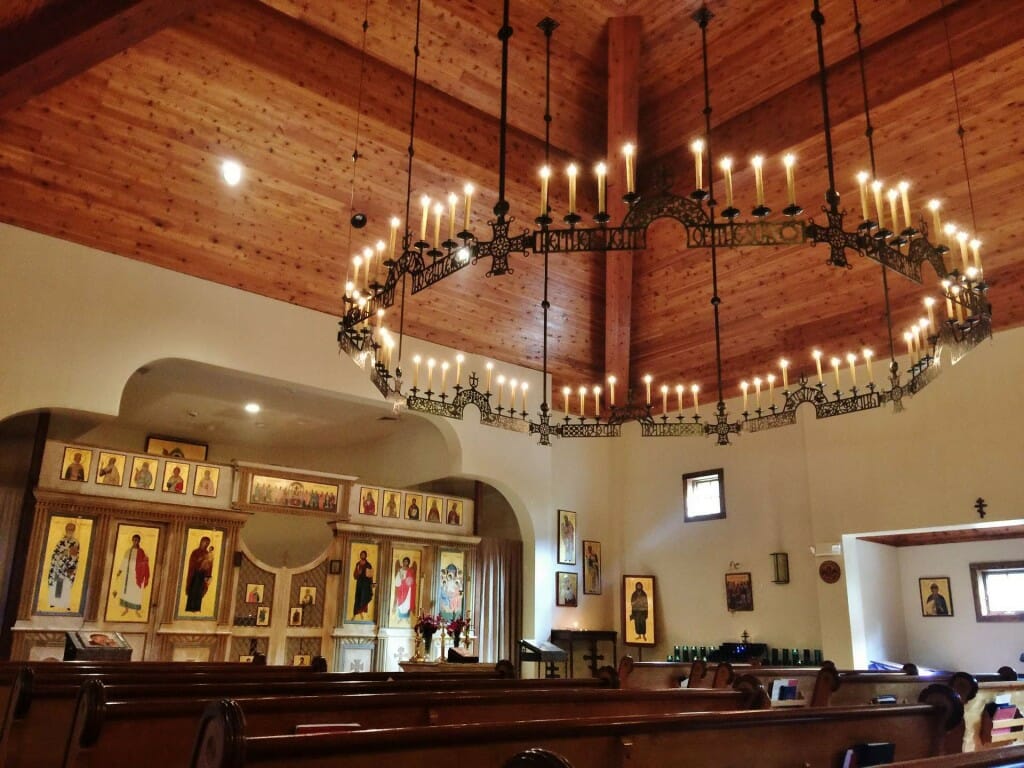
I have had the opportunity recently to make and install two choros chandeliers, a type of fixture that is of particular interest to me as a designer. I have written previously about similar chandeliers I have installed in churches in Charleston, South Carolina, and Waldorf, Maryland, and I refer readers to those articles for information…
Continue reading »A Carved and Inlaid Cross, a Collaborative Work
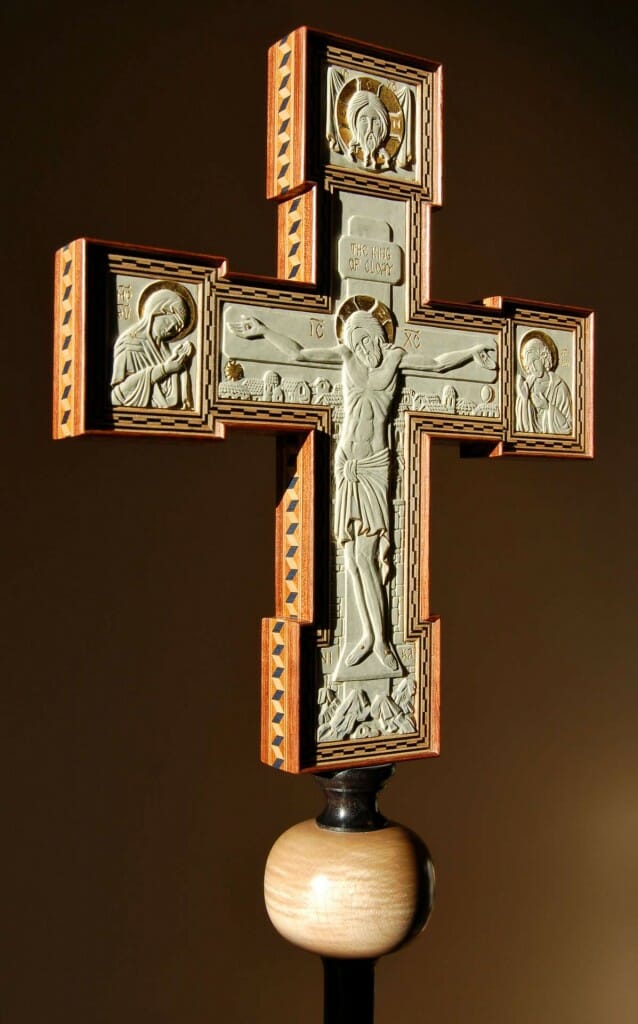
I have recently completed a small but highly interesting project, two years in the making, and involving several master artisans. It is a wooden cross with carved stone icons, crafted like a jewel, wholly traditional, and yet quite unlike anything seen before. This is one of those projects that grew, perhaps providentially, from an initially…
Continue reading »