
Similar Posts
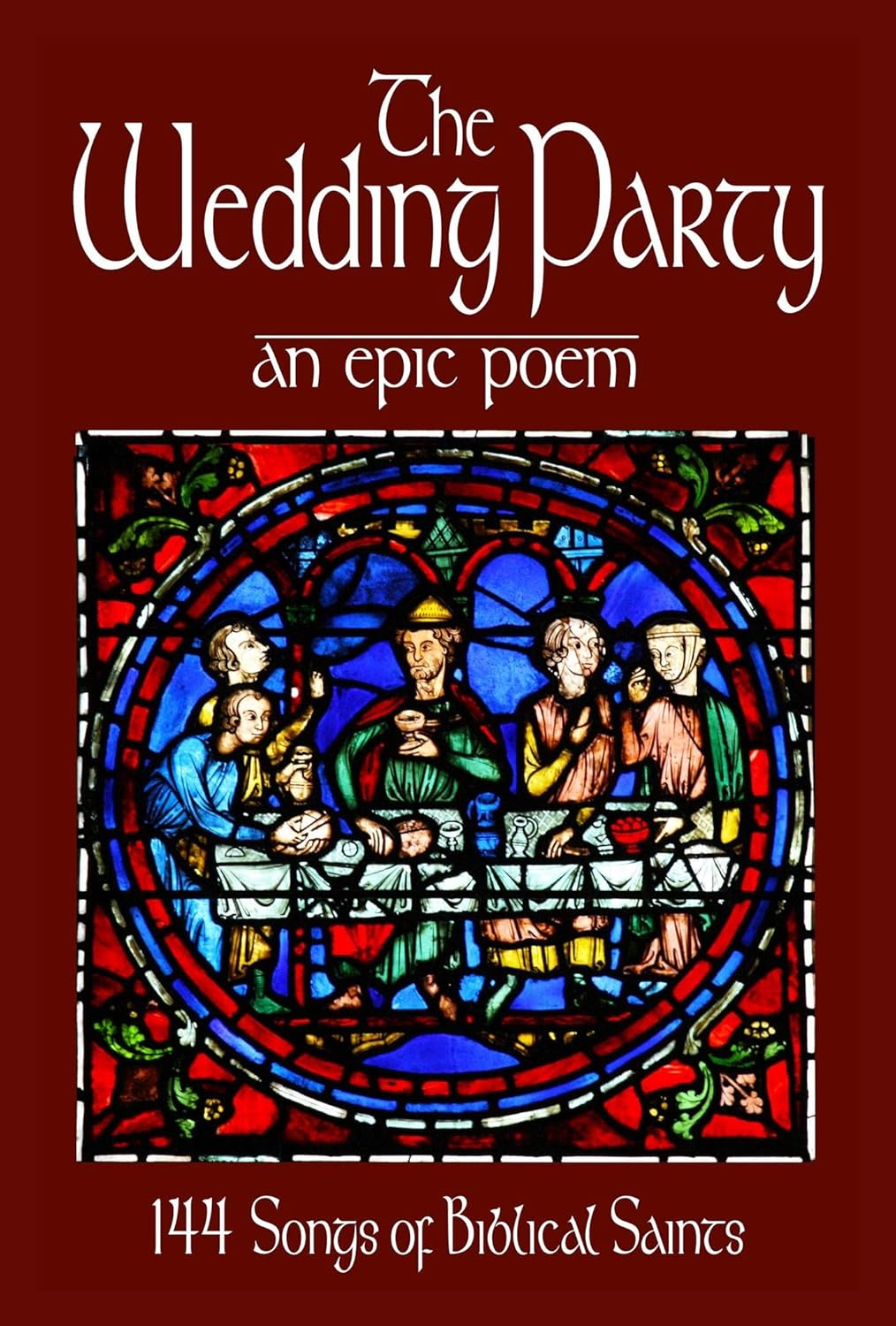
Cover of “The Wedding Party”
The Wedding Party: An Epic Poem comes as a breath of fresh air, and a testament that the riches of the Christian tradition are not disappearing. It is like discovering that there are women who still make lace by hand, or men who still sing shanties, or people who still converse in Latin and Greek.
This epic poem imagines the conversations at the wedding banquet in heaven, expounding on the love of Christ for His bride, the church. Rosenbaum puts forth in Spenserian stanzas 144 discourses by various biblical saints spanning the entirety of sacred history. Reclining at table in paradise, they adjure all those yet on earth to learn from their example and delight in the mysterious working of God.
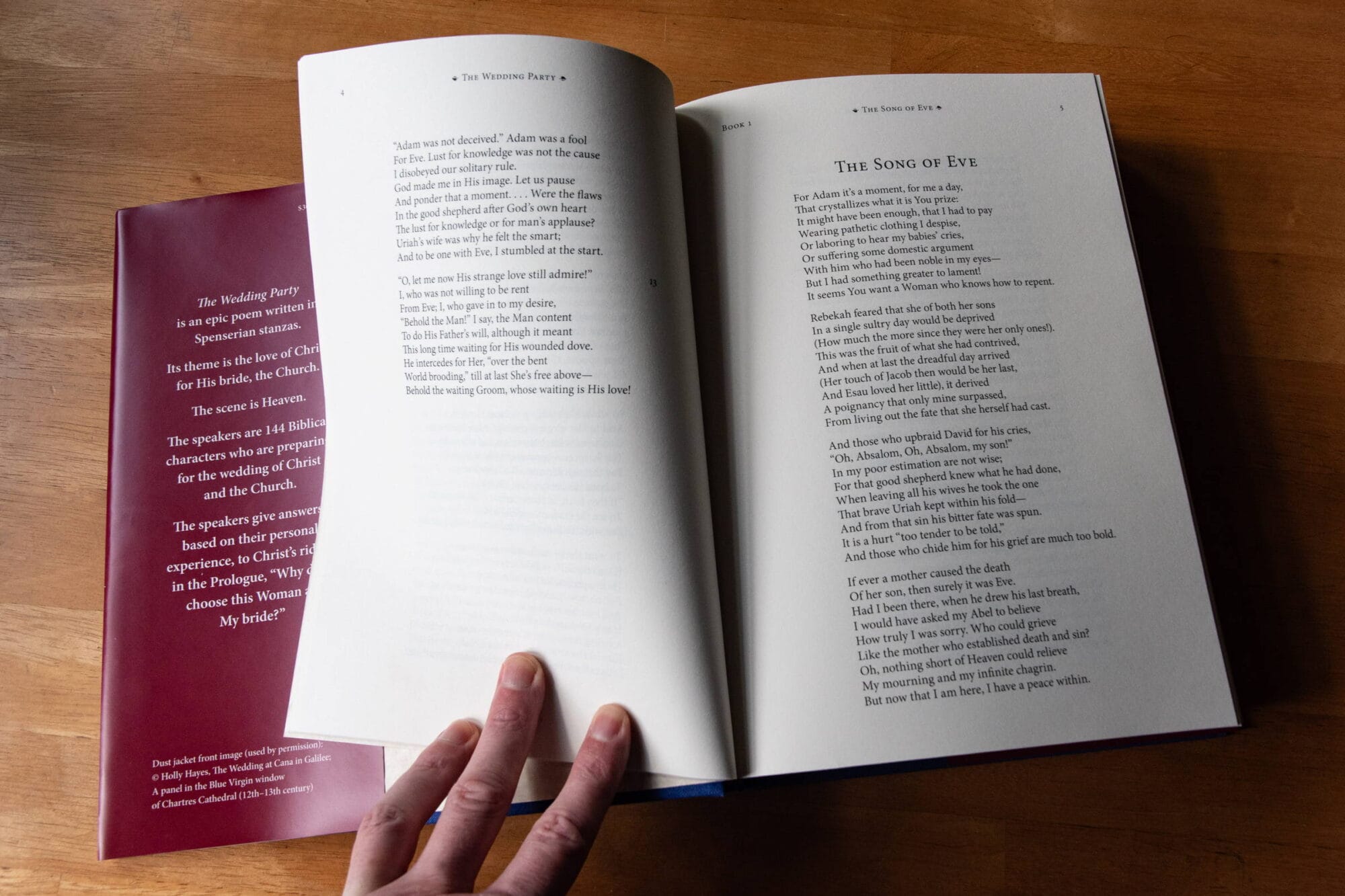
This book has a pedigree which stretches back for millennia; Christians have been imitating classical works of literature to write long-form poetry almost since the beginning. The Cento of Proba, a patrician matron from the fourth century, is a “patchwork quilt” of quotations from Virgil’s Aeneid, strung together to tell the story of creation, the exodus, and the life of Christ. Prudentius, living in the same century, described the Christian life through lengthy classical odes, replete with bucolic digressions on birds, and fishes, and bees; and it is out of one of these odes that we get the hymn “Of the Father’s Love Begotten.” Other poets have endeavored to synthesize the Scriptures into verse, notably St. Andrew of Crete and his Canon, Avitus of Vienne and his Deeds of Mosaic History, and Milton with his Paradise Lost and Regained.
To this august company Philip Rosenbaum joins and does homage with his Wedding Party. As Proba used Virgilian Hexameters, so Rosenbaum uses Spenserian stanzas, looking back to our own English “Classical” period. Likewise, as Spenser structured his Faerie Queen (or, as Prudentius his Psychomachia) upon the deeds of the Virtues, so Rosenbaum structures his banquet on the virtues of 144 biblical saints, accounting for, as Milton and St. Andrew of Crete before him, the whole of Sacred History.
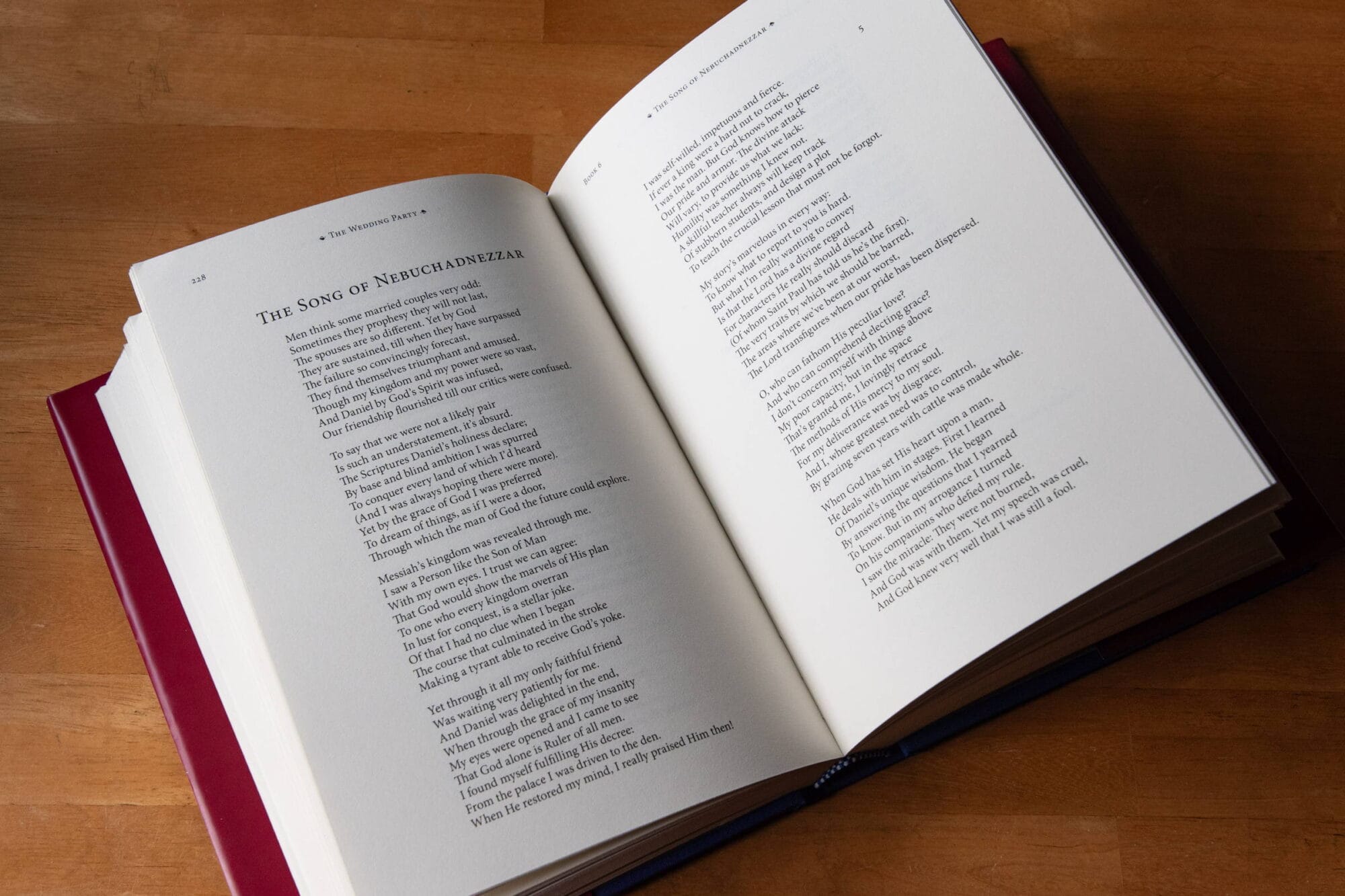
Each discourse of a saint probes the possibilities of even the most obscure passages in scripture, bringing sentiments to light that those with less patience would pass over in haste. Nevertheless, Rosenbaum’s verse reads ‘light as lef upon lynde,’ and frees one’s attention to focus on the abundance of wit which those verses contain. The thorough engagement with its predecessors and the commitment to metrical beauty in its poetry are a quality that is so rare in much cultural output today; Rosenbaum has remembered our inheritance, and this beautiful expression of the joy which is to come in Christ will enrich anyone who reads it.
Philip Brown Rosenbaum became a Christian in his mid-twenties and wrote his first poem at the age of thirty-four. He was born and raised in Washington, D.C., where he attended St. Albans School and sang in the Choir of Men and Boys at the Washington National Cathedral. He earned a degree in English at Harvard, then worked with delinquent boys as a counselor and wilderness school director before being called to an evangelical ministry in California. A decade later he moved back to Virginia and found work as a fine art consultant. He has published two books in prose, How to Enjoy the Boring Parts of the Bible and The Promise, and one in verse, Holy Week Sonnets. His website features samples of his shorter poems.
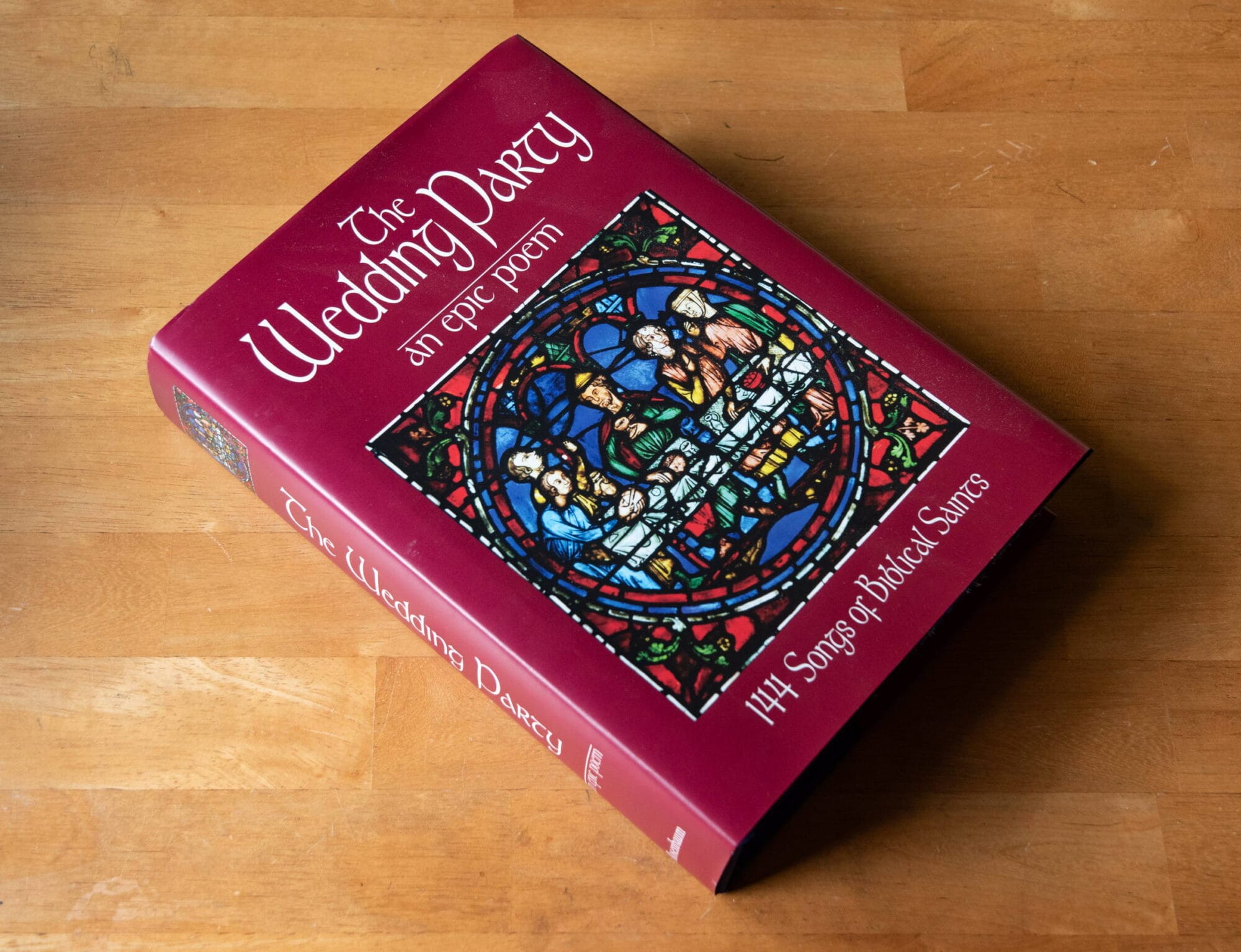
Interested readers can obtain an e-book copy of The Wedding Party from Amazon or a beautifully printed and bound hardback copy directly from the author ($30 plus shipping). Inquire at mailto:pbrpoet@rcn.com
If you enjoyed this article, please use the PayPal button below to donate to support the work of the Orthodox Arts Journal. The costs to maintain the website are considerable.