
Similar Posts
Icon Museum and Study Center, Clinton, MA
October 16, 2026- March 21, 2027
Opening to the public, October 16, 2026, the Icon Museum and Study Center in Clinton, Massachusetts presents rare icons from Novgorod, Moscow, Crete, and Constantinople.
For the first time in the United States, highlights from one of Western Europe’s largest museum collections of Orthodox icons will be on view in the exhibition Light from the East: Masterpieces from the Ikonen-Museum Recklinghausen.
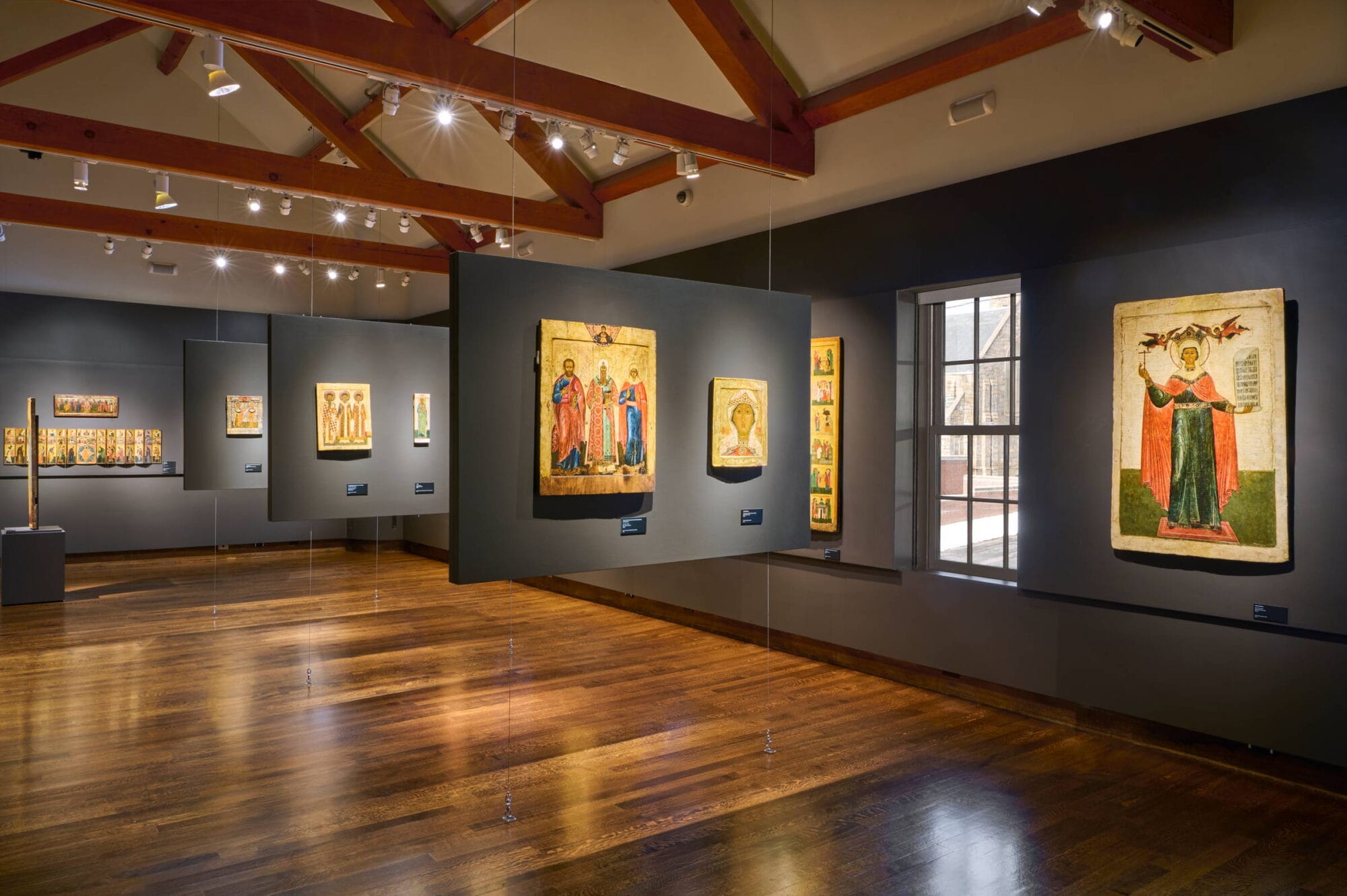
Gordon B. Lankton Gallery at the Icon Museum and Study Center
Photo by John Cannon
Drawing on the riches of the Ikonen-Museum in Recklinghausen, Germany, Light from the East journeys back in time 500 years beginning at the dawn of the 20th century in the final days of Imperial Russia, through the splendor of Venetian Crete in the 16th century, to arrive at the austere beauty of medieval Novgorod and the final glories of Byzantium.
By the Russian Revolution of 1917, the icon had stood as an emblem of Russian political and religious identity for nearly a millennium, asserting continuity between Tsarist Russia and the Byzantine Roman Empire. When Byzantine capital Constantinople fell to the Ottoman Turks, Moscow asserted itself as the center of the Orthodox church and proclaimed its imperial status as the Third Rome and political successor to the Byzantine Empire. Moscow’s ambitions to unify Russia into a single state saw the distinct regional iconographic styles like that of Novgorod—which itself went back to the very origins of Russian icon painting in the 12th century — absorbed into Moscow’s unified imperial style.
After the Fall of Constantinople, Greek artists and scholars found patronage within the colonies of Roman Catholic Venice. On Crete iconographers blended the elegance of Renaissance art with the timeless spiritual authority of Byzantium and produced masterpieces prized by both Orthodox and Catholic clientele. Yet, when the Ottomans captured Crete in 1669, icon painting in the Eastern Mediterranean contracted again, taking on a regional approach as artists produced icons with more modest means for local markets.
By the fifteenth century, Greek and Slavic icon painting had grown into distinct branches on the tree of Orthodox iconography, at times intertwined by shared artists and Orthodox faith, at other times separated by wars, conquests, tastes, and trends. This exhibition testifies to Greek and Russian icon-painters grappling with the rise and fall of empires at the dawn of modernity.
The five icons presented here, offer a glimpse of this rare opportunity to examine 30 masterpieces of Russian and Greek iconography from Western Europe’s largest museum collection of old Orthodox Icons, presented in the contemplative galleries, and idyllic setting of the Icon Museum and Study Center, in Clinton, MA.
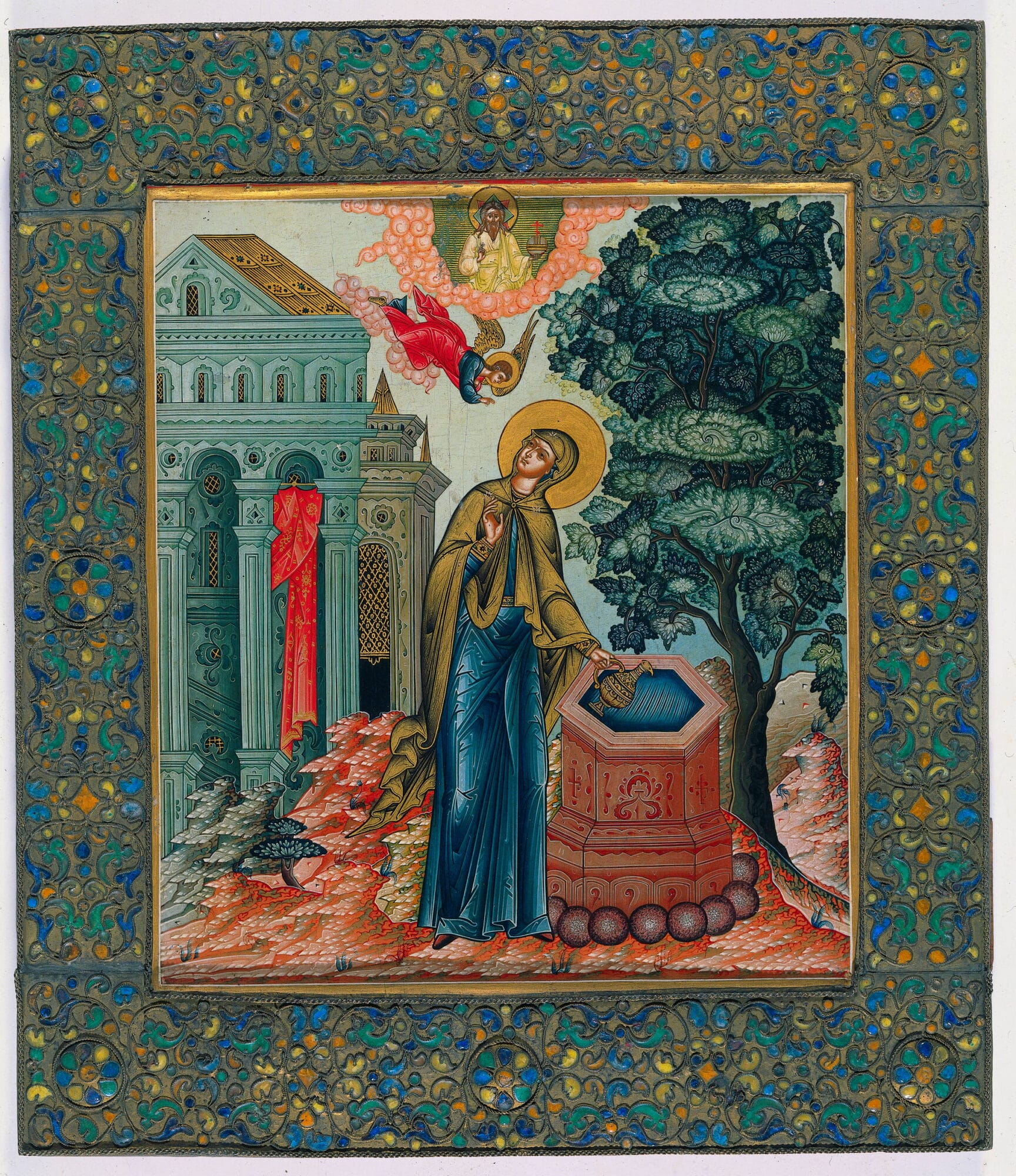
Annunciation at the Well
Early 20th century Egg tempera on wood, basma with filigree and enamel
Mstyora, Russia
Loan 2026.01.04, 40
Photo credit Ikonen-Museum Recklinghausen
The End of an Age
Mary turns her head as she gathers water at the well, startled by a voice coming out of nowhere. Gabriel soars down from heaven calling out his greeting. Frightened, the young maiden runs inside and there receives the angel’s message.
This rare icon takes as its inspiration the account of Annunciation in the Gospel of James. The artist—a master Old Believer painter from the village of Mstyora—has suffused the image with a cool light, revealing a love for delicate pattern and texture in the rocks, leaves, and architecture that fill the scene.
When this delicate little icon was painted around the year 1900, it stood at one end of a tradition of Slavic icon painting that stretched back nearly 1,000 years. Despite centuries of political upheaval and military conquest that marked the years between 1453 and 1917 in the Orthodox East, icon painting persevered.
And yet, within a decade of this icon’s creation, icon-painting in Russia was banned under Soviet anti-religious law. The icon workshops that made up the economy of numerous communities throughout the Russian Empire were forced to close, secularize, move, or go under cover.
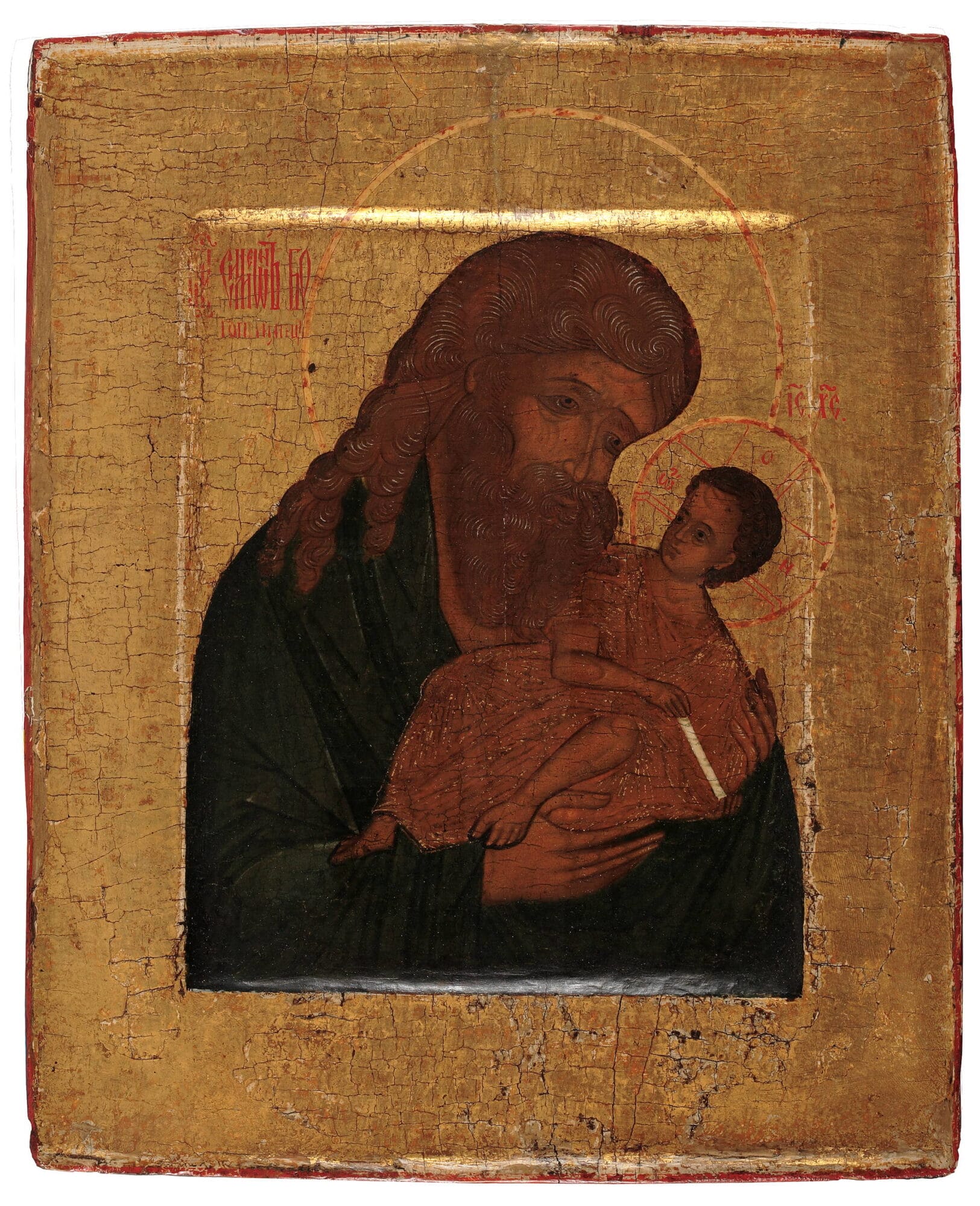
Saint Symeon the God-Bearer
Late 16th century
Egg tempera on wood
Moscow, Russia
Loan 2026.01.12, 443
Photo credit Ikonen-Museum Recklinghausen
Moscow
There is a bittersweet expression on the old man’s face. The righteous Elder Symeon, who had been told by the Holy Spirit that he would not die before beholding the Salvation of his people, now holds the Christ Child in his arms.
Despite the tenderness with which Symeon holds the baby Jesus, the child twists and turns as if trying to wriggle free. Icons and hymns of the Orthodox Church use this encounter between infant and elder as an opportunity to encourage the faithful to contemplate the mystery of Christ’s sacrifice. The child is shown squirming with fear and exposing his left leg, a common artistic shorthand for the bodily suffering he would undergo, while his face remains resolutely fixed on the elder who prophesized Christ’s willing, redemptive death. With eyebrows furrowed, Symeon looks past the child, off into the distance as he prepares to depart this life in peace.
The delicate lines of Symeon’s hair, the rich gold of the background and Christ’s robes, and subtle expressions on the faces are typical of the refined courtly style of icon painting that gained popularity in 16th and 17th century Moscow.
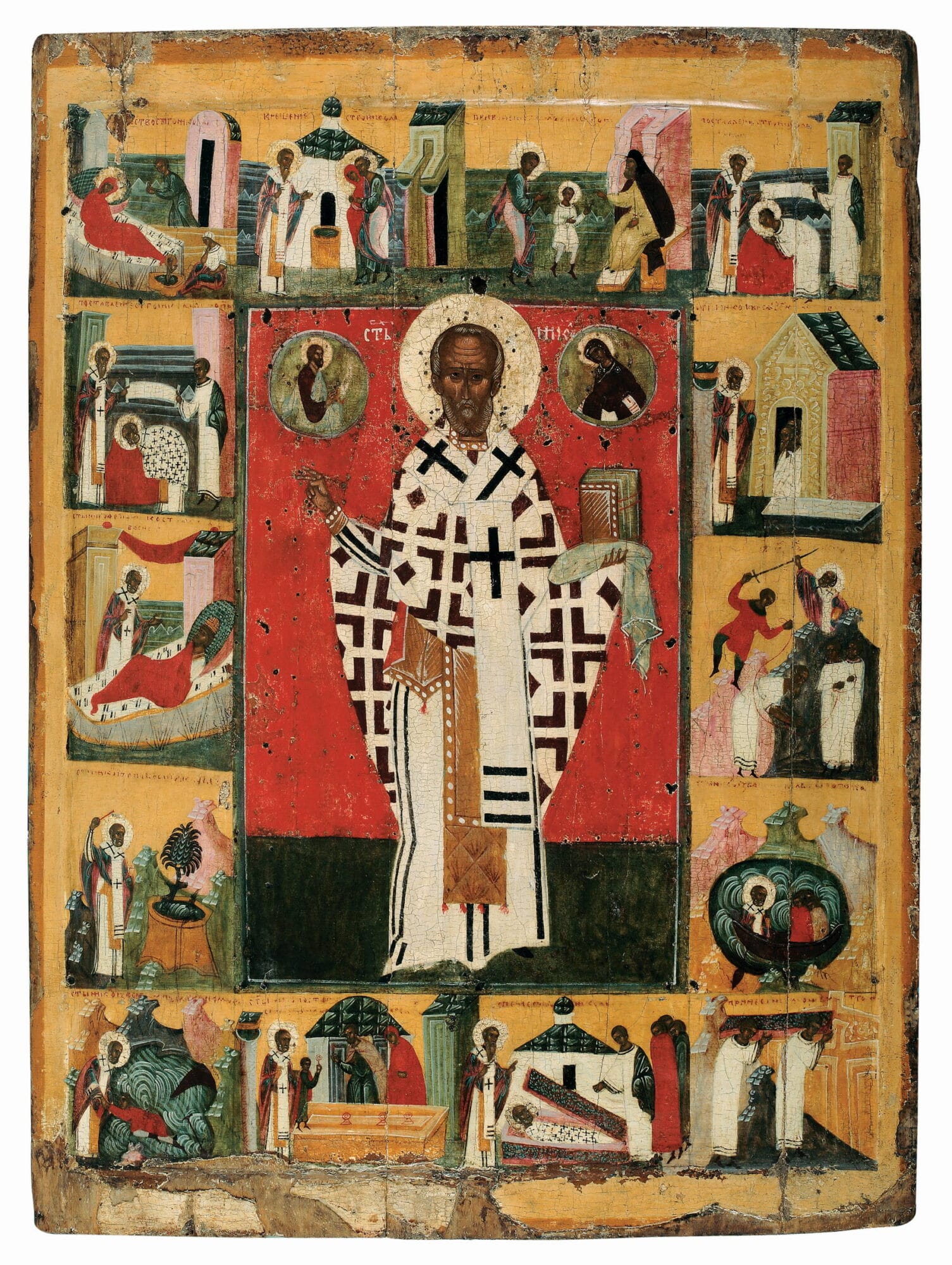
Saint Nicholas of Zaraysk with Scenes of his Life
End of the 15th century
Egg tempera on linden wood
Novgorod, Russia
Photo credit Ikonen-Museum Recklinghausen
Novgorod
Legend recalls that an icon like this one—showing Saint Nicholas standing with arms outstretched—was present at the baptism of Vladimir the Great in 988. This event traditionally marks the conversion of Rus’ to Christianity.
In 1225, Saint Nicholas is said to have spoken through the icon to a local priest instructing the man to take his wife and child, and venture north bringing the miracle-working image to aid Prince Theodore of Riazan in his struggle against the Mongol invasion. On campaign in 1237, the prince was captured and later died. Upon hearing of her husband’s death, and rather than facing capture at the hands of the Mongols, Princess Eupraxia threw herself from the highest tower in the palace, clutching her infant son to her chest.
It is said that the town where this happened was renamed Zaraysk, from “zarazit’sya” meaning “to fall to one’s death,” in memory of the tragedy. The family would eventually be reunited in death and buried beneath the icon which came to be known as Saint Nicholas of Zaraysk.
The vivid icon before you, typical of medieval Novgorod, is an especially early copy of an iconography that would become popular throughout the Slavic world.
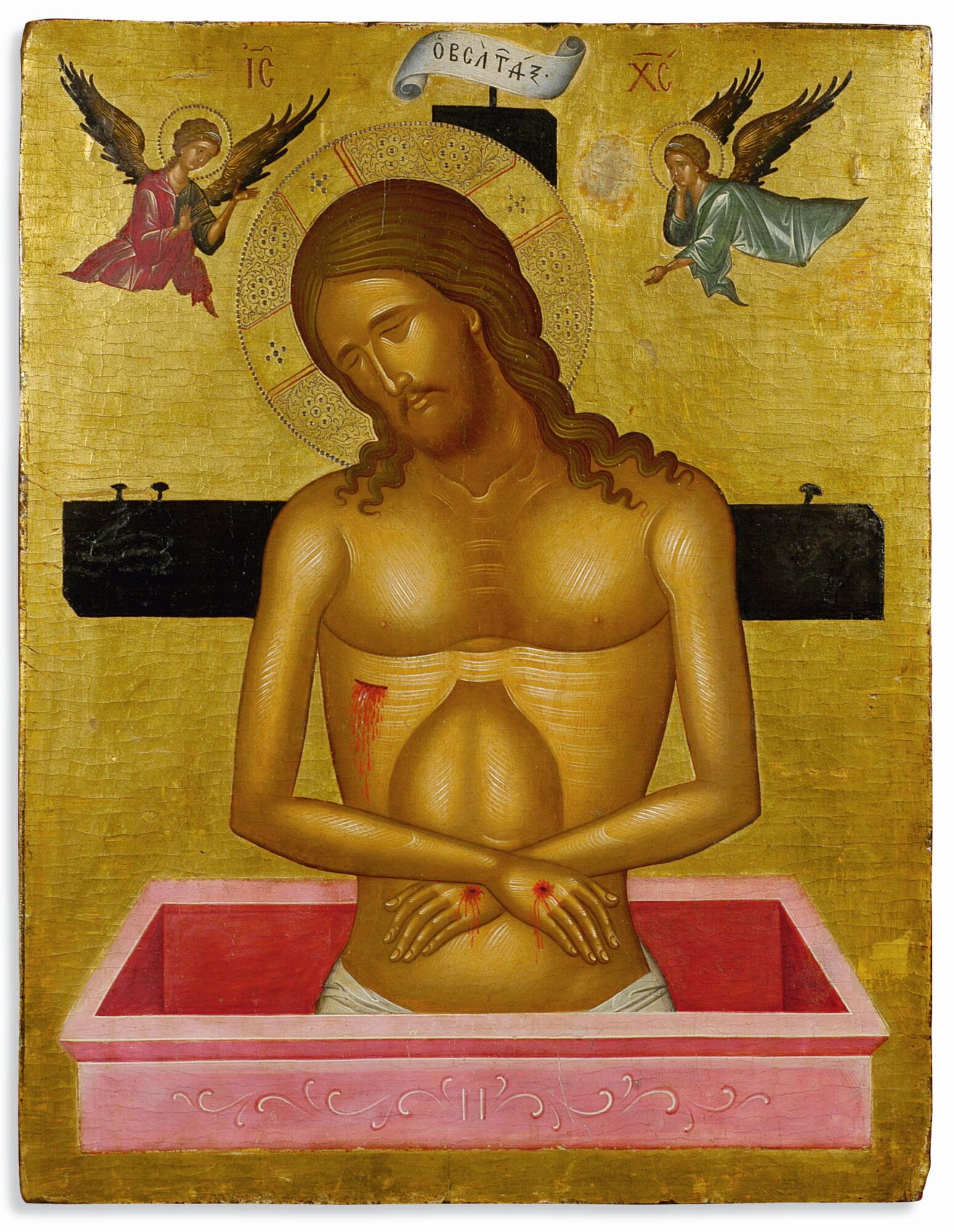
The Man of Sorrows
Attr. Andreas Ritzos
End of the 15th century
Egg tempera on wood
Crete
Loan 2026.01.23, 345
Photo credit Ikonen-Museum Recklinghausen
Photo credit Jürgen Spiler for Ikonen-Museum Recklinghausen
Crete
Christ’s head tilts to the left while his dead torso remains upright in an image that hovers out of time and place. Blood and water continue to pour forth from his side even as his death appears calm as sleep.
Icons like this were first used in Byzantine monasteries in the twelfth century during the Holy Week services. When the Crusaders sacked Constantinople in 1204, they brought images like this one back to Western Europe with them. In Rome, a Byzantine mosaic of the Man of Sorrows became the focus of a pilgrimage that attracted thousands from as far away as England and Scandinavia and inspired generations of artists by this deeply moving subject matter.
This icon, attributed to master iconographer Andreas Ritzos (1421-1492), carefully follows the traditional Byzantine way of depicting the Man of Sorrows. Yet the presence of three nails on the crossbeam, as opposed to four nails depicted according to Orthodox tradition, suggests the iconography was adjusted to appeal to Roman Catholic clients. Ritzos, like other Greek icon painters, made devotional images for both Orthodox and Catholics.
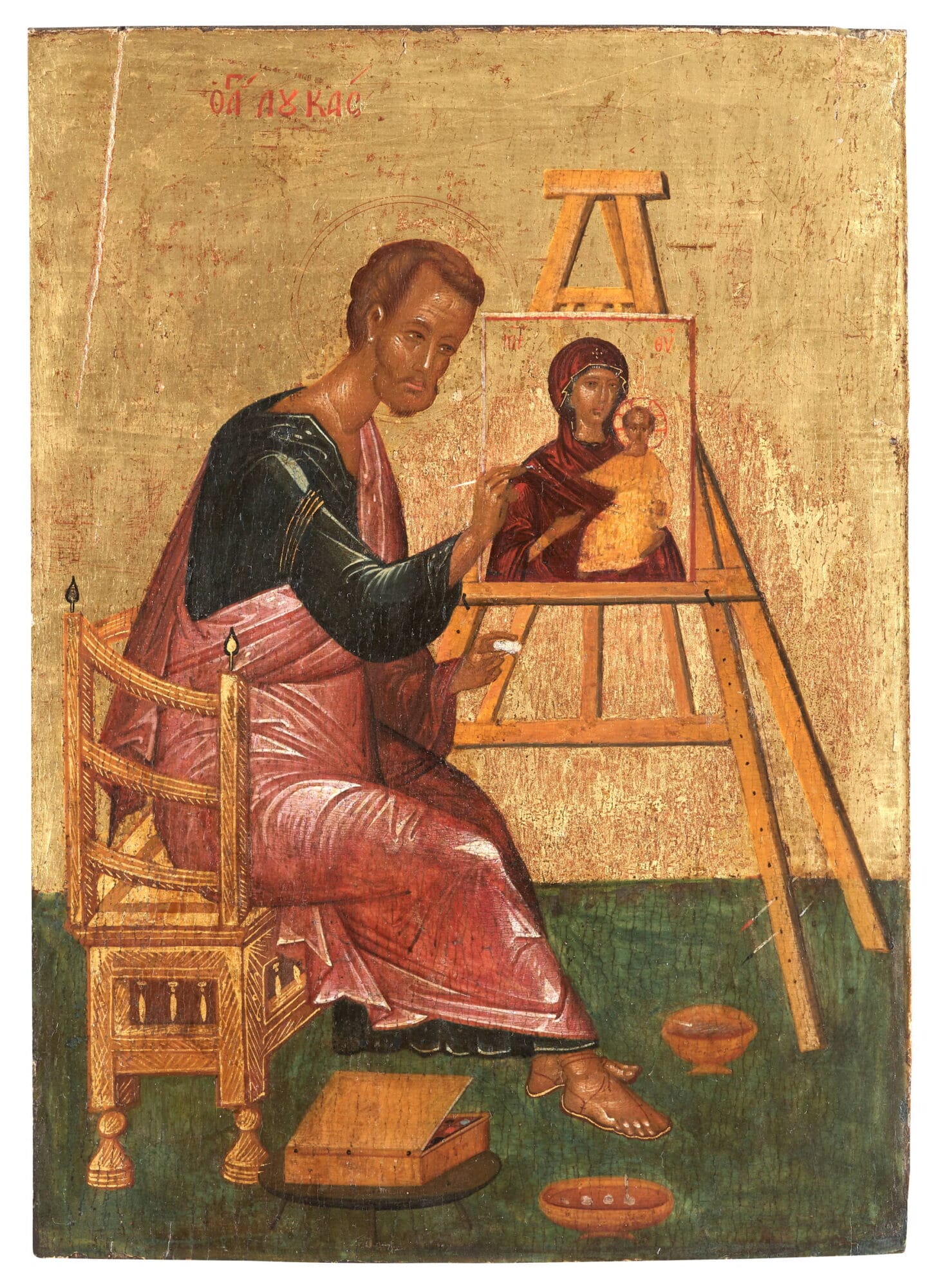
Saint Luke Painting the Mother of God Hodegetria
Early 15th century
Egg tempera on wood
Constantinople or Crete
Loan 2026.01.14, 424
Photo credit Jürgen Spiler for Ikonen-Museum Recklinghausen
Byzantium
The evangelist pauses, his brush hovering just over the surface of the icon. Before placing the last dab of gold on the star over Mary’s shoulder, he looks up, past the easel, out of the frame of the icon to the subject he is painting.
Ancient church tradition holds that the Evangelist Luke painted the first icon—a portrait from life of the Virgin Mary and Christ Child. We do not directly see the subject of the icon on which Luke fixes his gaze. Instead, the Mother of God in the icon on the easel meets our searching eyes with an expression of calm assurance. With her hand she shows the way.
Painted around the year 1400 either in the imperial capital Constantinople or on the island of Crete, this icon is a masterpiece of late Byzantine iconography. It was once a part of a multi-panel icon, pieces of which are now held at the Metropolitan Museum of Art, the Marianna Latsi Collection in Athens, and the National Museum of Stockholm.
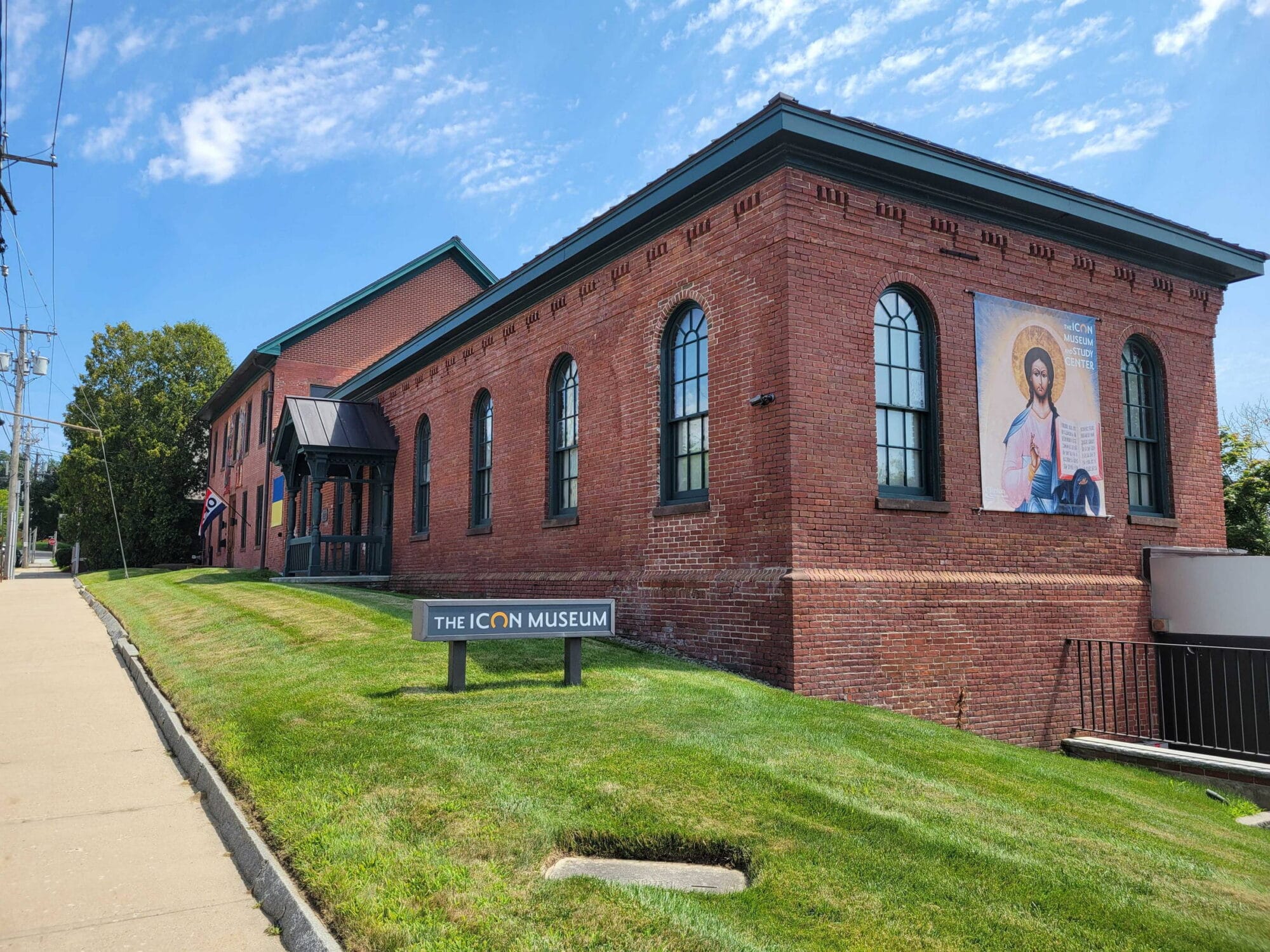
West Gallery Exterior at the Icon Museum and Study Center
Photo by Anna Farwell
Light from the East: Masterpieces from the Ikonen-Museum Recklinghausen is held in celebration of the Icon Museum and Study Center’s 20th Anniversary. As an institution dedicated to sharing, preserving, and studying the riches of Eastern Christian Sacred Art, we welcome local and international visitors of all backgrounds to encounter the holy image in a contemplative setting situated in small-town New England.
The exhibition opens to the public on Oct. 16. A conference running from Oct. 15-16 will feature talks by historians of Orthodox iconography from Germany, Greece, Russia, and throughout the US and Canada. This event is open to scholars, students, and all members of the interested public.
For more information and to register, please visit iconmuseum.org/symposium-2026